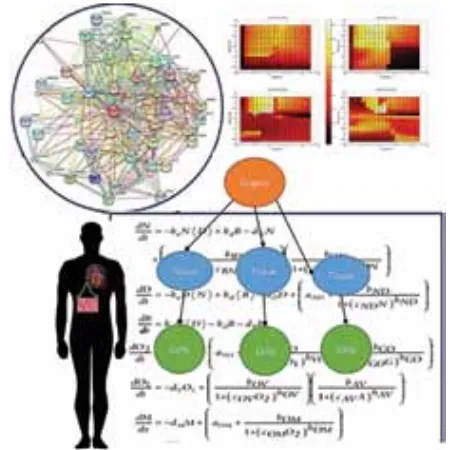
Research in Biosystems Engineering is primarily focused on five themes, namely, (i) Disease and Health, (ii) Biomaterials, (iii) Development of Tools for Bioengineering, (iv) Bioenergy,  and (v) Data/Systems Analysis. In the area of disease and health, our research focuses on understanding signaling pathways in cancer, whole body human metabolism towards  disease characterization, cell culture engineering, study of cellular migration in responses to multiple cues, and antibiotic resistance and stress response in pathogens. In the area of biomaterials, the group has been focusing on development and characterization of nano-structured materials, their structure and their applications to health care and manufacturing  processes. Particular areas of interest include: (a) micro-devices for cardiac use, (b) nano-composites for dental use, (c) drug delivery with nano-particles, (d) nano-structured hollow  particles for dialysis, (e) stem-cell bioreactors and scaffolds, and (f) nanoparticles in alternate and traditional medicine. Work in the area of cell engineering and drug delivery focuses on  measuring bio-membrane properties, liposomal drug delivery systems and stem cell expansion. A group of faculty are working towards development of tools to facilitate use of  microorganisms as a platform for use as cell factories – these include design and characterization of cellular components to control transcription and translation. In the area of bioenergy,  the group is working towards development of bacterial and algal strains and tools to yield high value chemicals and biofuels. Finally, in the area of Data/Systems Analysis, a group of  faculty are working towards analysis and integration of large amounts of data generated from cells, and use a systems perspective to better understand the design principles employed by biological systems and organisms.

Image
Bio_Dynamic modeling of wholebody metabolism

Predictive Modeling of Monoclonal Antibody Glycosylation and Critical Quality Attributes

Monoclonal antibodies are complex biological products, and glycosylation and other critical quality attributes (CQAs) can significantly influence their efficacy, stability, and pharmacokinetics. These attributes are sensitive to the metabolic state of the production cell and bioprocess conditions, making their prediction and control an important challenge in biomanufacturing. This project will develop mechanistic and data-driven models to predict mAb glycosylation and CQAs from cellular metabolism and process variables.

Integrating Metabolomics and Genome-Scale Metabolic Modeling for Optimization of CHO Cell Culture Bioprocesses

Chinese Hamster Ovary (CHO) cells are the dominant host for manufacturing monoclonal antibodies and other biotherapeutics. This project will integrate extracellular and intracellular metabolomics with genome-scale metabolic models to characterize cellular metabolism during bioprocessing. The objective is to identify metabolic bottlenecks, optimize media and feeding strategies, and develop predictive models for improving cell growth, productivity, and product quality.