Ongoing research in the Energy, Environment and Sustainability area, addresses non-fossil energy, industrial energy, climate and environment. In the area of energy, major research  topics under investigation are: Biomass and biofuels, Fuel cells, Solar thermal power, Process modeling and energy analysis and Combustion systems. In the area of biomass and biofuels, research addresses challenges at different scales. This includes work on improving biomass productivity through metabolic engineering, enhancing fuel production and selectivity through enzyme improvements, and achieving techno- economic feasibility through optimization approaches. In the area of fuel cells, research is aimed towards better selection of electrode materials by understanding processes that influence performance degradation. Work in the area of solar thermal power plants is focused in solving the challenging control problems in the domain. In industrial applications, work is mainly focused on industrial process modelling and energy integration as well as risk analysis. Research is also being carried out on in-situ coal gasification and biomass combustion under the theme of combustion systems.

In the broad and cross-cutting area of environment, which includes climate and sustainability, highly complex systems are being studied through phenomenological understanding and modeling of atmospheric constituents and transport, statistical methods for understanding and reducing uncertainty and complex systems-based modeling tools. The specific topics under investigation are: Climate, Sustainability, Water pollution, and Carbon capture systems.

Image
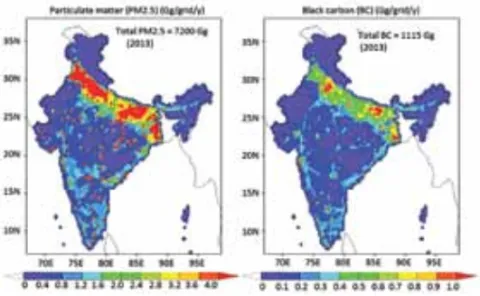
Spatial distributions of annual emissions of particulate matter (PM 2.5 ) and black carbon (BC) from Indian indus- trial, transport and residential energy-use

Multiscale Modelling of Non-Aqueous Electrolytes for Electrocatalysis

Electrocatalysis is central to decarbonising the chemical industry, from carbon dioxide reduction to green hydrogen production. Most computational tools in this area were developed for aqueous systems, but the field is now moving towards non-aqueous electrolytes such as ionic liquids and organic carbonates, which offer new reaction pathways and stability windows. Our group has recently implemented an implicit solvent model which interfaces with a density functional theory code.

Water Electrolyzers for Hydrogen Production

Water electrolysis using renewable electricity to produce hydrogen is an option for the decarbonization of the major industrial processes and the energy sector. Renewable hydrogen is a flexible molecule to store energy. However, the electrochemical methods to split water are highly energy consuming leading to high Levelized Cost of Hydrogen (LCOH). To bring the LCOH down and accelerate the commercialization of renewable hydrogen, we need to look at alternate pathways for electrochemical hydrogen production.

Energy Storage in Redox Flow Batteries

The vanadium redox flow battery (VRFB) is regarded as one of the most promising candidates for future large-scale energy storage owing to its numerous advantages, including flexible and scalable energy capacity, long cycle life (up to 25 years), high safety and environmental friendliness (no fire risk), and the possibility of low-cost recycling of active materials. However, VRFBs still suffer from intrinsic limitations associated with the vanadium electrolyte, such as low solubility and poor thermal stability.

Smart Diagnostics of Grid-Integrated Battery Systems Using Physics-Based Models and Machine Learning

With the rapid deployment of renewable energy and battery energy storage systems (BESS), reliable battery diagnostics are essential for ensuring safety, performance, and long service life. This PhD project will develop next-generation diagnostic and prognostic tools by combining physics-based electrochemical models with machine learning for accurate estimation of battery state, health, and degradation.

Batteries Development and Electrochemical Modeling of Low-Temperature Optimized Sodium-Ion Batteries

Reliable battery operation at low temperatures is critical for defense, drones (UAVs), aerospace, electric mobility, and grid-scale energy storage. This PhD project aims to develop high-performance sodium-ion batteries for cold-climate operation through a combination of experimental research and physics-based electrochemical modeling. The research will focus on understanding ion transport, reaction kinetics, and degradation using advanced electrochemical characterization (e.g., EIS and cycling) and computational modeling.