The Reaction Engineering and Catalysis group pursues excellence in both theoretical and experimental aspects, targeting commercially important applications from a fundamental standpoint with a mix of classical and modern concepts and techniques. Thus, the focus of the group is on classical areas such as process design and optimization as well as modern  areas such as biofuels (from raw materials to products), advanced energy technologies such as fuel cells, electro-synthesis of new products by green and sustainable technologies,  catalysis (synthesis, characterization and performance evaluation) for fine chemicals, and chemical technologies for semiconductor applications (Chemical vapor deposition of silicon as an alternative to Czochralski process). Some of the research by the group is specific to India such as underground coal gasification of high ash content coals which is primarily available  in India. In addition, the group is also engaged in providing smart engineering solutions to Indian Industries. The group has expertise both in theoretical aspects involving    modeling and computational studies of industrial as well as bio-reactors and experimental aspects involving performanceevaluation of scaled down reactors, electrochemical systems, catalyst synthesis and characterization etc. The emphasis of the group is always on fundamental understanding. The facilities available with the group and the department allow a    multidimensional and multiscale understanding of the problems related to catalysis and reaction engineering. The students working on different aspects of catalysis and reaction engineering are trained on sophisticated instruments and advanced computational techniques which will be critical when they take positions in academia or industry. Thus the group  serves a vital national interest in providing trained manpower. Quite often the spectrum of research on catalysis and reaction engineering intersect with chemistry, biology and materials science. Thus, the students are trained to learn and apply concepts and methodologies from these areas. The group encourages students to broaden the horizons of scientific learning and equips them with the tools to do so. As the group looks to the future, it aims to develop new chemicals and processes, green and viable technologies, process and technologies targeted to meet India’s needs in terms of energy, environment and chemicals.

Image
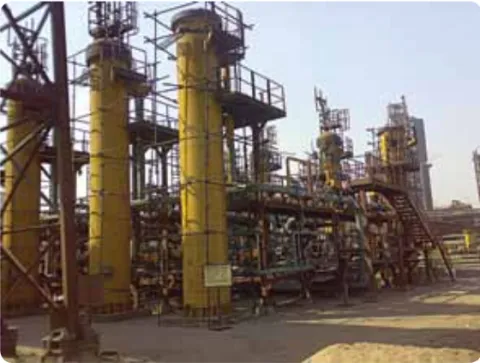
Developed & commissioned industrial unit to treat natural gas to remove C3+ components without surge vessels

All-iron redox flow battery

The project will focus on the development of an all-iron redox flow battery, particularly employing non-aqueous electrolytes. Although all-vanadium redox flow batteries (VRFBs) have been successfully developed and commercialized, their widespread deployment is constrained by resource availability and cost, especially in the Indian context. In this regard, iron-based redox flow batteries present a promising and more sustainable alternative. However, several challenges remain for iron-based systems.

Investigating the Underlying Unity of Chemical and Electrochemical Processes

It has been reasonably established that catalytic chemical oxidation and electrochemical oxidation are not fundamentally different or unrelated processes. Rather, they appear to be different manifestations of the same underlying electrochemical mechanism. In this context, the project aims to develop a more unified framework for comparing chemical and electrochemical oxidation pathways, building on the work conducted by previous students.

Investigations on electrochemical CO2 reduction to formate/other C1/C2 chemicals

This is an experimental research project centered on the electrochemical reduction of carbon dioxide (CO₂) into formate or other high-value chemical products (1,2). The work will explore the design, synthesis, and application of metal and alloy-based catalysts, with a particular emphasis on their integration into gas diffusion electrodes (GDEs). One of the features would be to investigate the effect of gas composition on the products.

High-capacity Prussian blue cathodes for Zn ion battery

Recent investigations in my laboratory suggest that Prussian Blue, particularly copper Prussian Blue analogues, can serve as effective cathode hosts for a dual ion–zinc battery system. These materials are attractive due to their open framework structure, tunable composition, and ability to accommodate multivalent ions, making them promising candidates for next-generation energy storage devices.

Multiscale Modelling of Non-Aqueous Electrolytes for Electrocatalysis

Electrocatalysis is central to decarbonising the chemical industry, from carbon dioxide reduction to green hydrogen production. Most computational tools in this area were developed for aqueous systems, but the field is now moving towards non-aqueous electrolytes such as ionic liquids and organic carbonates, which offer new reaction pathways and stability windows. Our group has recently implemented an implicit solvent model which interfaces with a density functional theory code.

Water Electrolyzers for Hydrogen Production

Water electrolysis using renewable electricity to produce hydrogen is an option for the decarbonization of the major industrial processes and the energy sector. Renewable hydrogen is a flexible molecule to store energy. However, the electrochemical methods to split water are highly energy consuming leading to high Levelized Cost of Hydrogen (LCOH). To bring the LCOH down and accelerate the commercialization of renewable hydrogen, we need to look at alternate pathways for electrochemical hydrogen production.

Energy Storage in Redox Flow Batteries

The vanadium redox flow battery (VRFB) is regarded as one of the most promising candidates for future large-scale energy storage owing to its numerous advantages, including flexible and scalable energy capacity, long cycle life (up to 25 years), high safety and environmental friendliness (no fire risk), and the possibility of low-cost recycling of active materials. However, VRFBs still suffer from intrinsic limitations associated with the vanadium electrolyte, such as low solubility and poor thermal stability.