
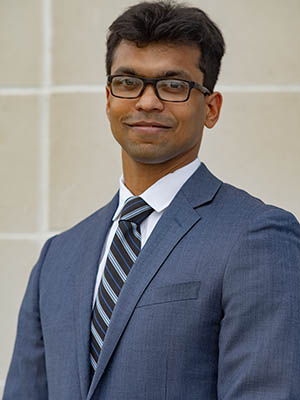
Speaker Name: Prof. Manish Shetty
Date: 28-10-2026 (Wednesday)
Time: 14:30
Venue: LC001
Abstract: Catalysis is pivotal to the chemical industry’s sustainable transition. This shift needs catalytic materials that are earth-abundant, active, selective, and stable. Achieving this hinges on fundamental molecular-level insights into the underlying chemical transformations. These insights enable the rational synthesis of tailored molecular architectures that can precisely modulate chemical conversions.
For instance, tandem chemical conversions underpin both conventional and emerging processes, from alkane isomerization to CO2 upgrading to fuels. These conversions are often treated as sequential reactions and guided by the qualitative proximity-criterion “the closer the better”, for catalytic site proximity. However, this simplification overlooks the complexities introduced by reaction networks, thermodynamics, transport phenomena, and the mobility of catalytic moieties (e.g., cations or oxide clusters).
In this seminar, I will discuss our investigations into the origins of site-proximity effects for CH₃OH-mediated tandem CO₂ hydrogenation (TCH) over oxide/zeolite catalysts. By analyzing reaction pathways, thermodynamics, and transport processes across multiple length scales, we reveal molecular-level nuances that influence overall rates and selectivity. To illuminate how transport phenomena dictate reactor-scale performance, we introduce a transport-resistance framework that quantifies intrapellet and zeolite intrapore diffusion at varying catalyst proximities. This approach is extendable to other tandem and multicomponent catalytic systems, where diffusion constraints are critical for the production of sustainable fuels and chemicals.
Additionally, I will share our work on coupling hydrogenolysis and dehydrogenation pathways to enable H₂-free conversion of waste oxygenates, using alcohols as sacrificial hydrogen donors on metal-reducible metal-oxide interfaces. Together, these studies point toward new directions in catalyst design and process integration for a more sustainable chemical industry.
Bio: Prof. Manish Shetty is an Assistant Professor in the Artie McFerrin Department of Chemical Engineering at Texas A&M University, since Fall 2021. He obtained his bachelor’s in chemical engineering from the Indian Institute of Technology Bombay in 2011 and his Ph.D., also in Chemical Engineering, from the Massachusetts Institute of Technology in 2017. Post PhD, he completed his postdoctoral training at the University of Minnesota and the Pacific Northwest National Laboratory (PNNL) between 2017- 2021. His research has centered around a wide range of kinetic, synthetic, spectroscopic, and theoretical approaches to study chemical transformations at catalytic surfaces. At Texas A&M, two of his research thrusts focus on utilizing chemical precursors such as carbon dioxide, and converting them into fuels, chemicals, and liquid carriers, and enhancing catalytic recycling and upcycling of plastics. His work has been recently recognized by the Ralph E Powe Junior Faculty Enhancement Award and ACS PRF Doctoral New Investigator Award. He is also on the Early Career Advisory Boards of ChemCatChem, ACS Sustainable Chemistry and Engineering, and Journal of Catalysis.